Талибы в Кабуле
Feb. 13th, 2023 12:19 pm![[personal profile]](https://www.dreamwidth.org/img/silk/identity/user.png) corvinus_quintus
corvinus_quintus
«They were the winning party and, as such, these rural Taleban fighters were rewarded with government jobs and significant privileges. Yet, victory also precipitated many difficulties for them. City life is so absolutely different from what they were used to, presenting unexpected problems but also unexpected delights. Three of our interviewees said they were going to bring their families and live permanently in Kabul, whereas two said they would leave them in the village and are actually hoping to be able to leave Kabul themselves at some point.
Broadly speaking, all of our interviewees preferred their time as fighters in what they considered a jihad. Then, their lives were simple. They had few responsibilities or complications. Everything they faced was associated with war and the battlefield and their behaviour was bound by the strict norms of the madrasa.
Integrating into the formal order of government administration has turned into a major headache for our interviewees. The old structures with which they were familiar and comfortable vanished with the takeover and the dynamics of their lives changed utterly. Interviewees remarked on how their leaders and commanders, who used to live among them, have now shut themselves away in far-off offices. They also feel the degree of sincerity shown by fighters towards each other has faded. They lost many of the freedoms they enjoyed throughout the insurgency. The shift to working within government structures has forced them to adhere to official rules and laws they never faced before. They find ‘clocking in’ for office work tedious and almost unbearable, although some said they were now getting used to the routine.
The trouble that victory has brought to their lives does not end there: they also now need to earn money to support themselves and their families, something that was not needed during the insurgency when their own expenses were covered by the movement and they were entirely exempted from family needs. Now, Taleban must provide for themselves and contribute to the family finances. The jihad, a religious duty which exempted them from such everyday concerns, is over: they now have to work for the survival of their families like everyone else. The sudden reversal of roles experienced by Taleban fighters, from being able to foment popular discontent against the corruption of the Republican government to being cast as the cause of the country’s current economic woes has made a deep impression on the respondents.
Our interviewees had a negative picture of Kabul before the takeover, but living in the city has changed their perceptions. Their interaction with women has come a long way from what one could expect, given the Taleban movement’s conservatism. Our interviewee with the female classmate, for example, spoke to the author in the company of a fellow Taleb who, after the interview, jokingly told him, “Why didn’t you tell him the story about when your female classmate started a conversation with you, and you talked to her quite comfortably?” On the streets of Kabul, Taleban fighters have often given interviews and spoken to female YouTubers, an act that would have been completely forbidden throughout the movement’s past
Some of our interviewees, and other Taleban, have slowly begun to look critically at their own attitudes and the way they dress and conduct themselves in public. One Taleban fighter told the author in early July 2022 that “I don’t know when we [Taleban] will learn to be like normal people. The style most of us have in Kabul [long hair and a style of wide, baggy piran tomban] is very strange at this time and in this situation. The time this style looked good is long gone and we need to adjust to these new circumstances.”
... working in ministries has meant their interest in religious studies has suffered significantly, with a considerable number registering themselves instead in English and computer classes, which they deem necessary if they are to strive in their new roles.
The conservative notions of our interviewees, who have interacted with non-Taleban, have eased a great deal. External influence and interactions with actual Kabulis have already made inroads into their thinking. However, the author has also encountered Taleban who have remained strictly within their old circles and say they dislike the city and condemn its inhabitants for not living in accordance with what they consider true Islam. They are also worried about comrades ‘back-sliding’. One scholar recently warned a gathering at a mosque in Kabul attended by the author that: “The mujahedin need to be ideologically and intellectually strengthened,” so, “they don’t fall into the traps of this shar ul-qurun [the worst of times.].” Another Taleban-affiliated mullah at the same gathering said, “The possibility that we could go in the wrong direction is now at its highest, God forbid. I see many mujahedin turning away from the cause of jihad and sharia and instead chasing worldly pursuits.”»
New Lives in the City: How Taleban have experienced life in Kabul - Afghanistan Analysts Network - English
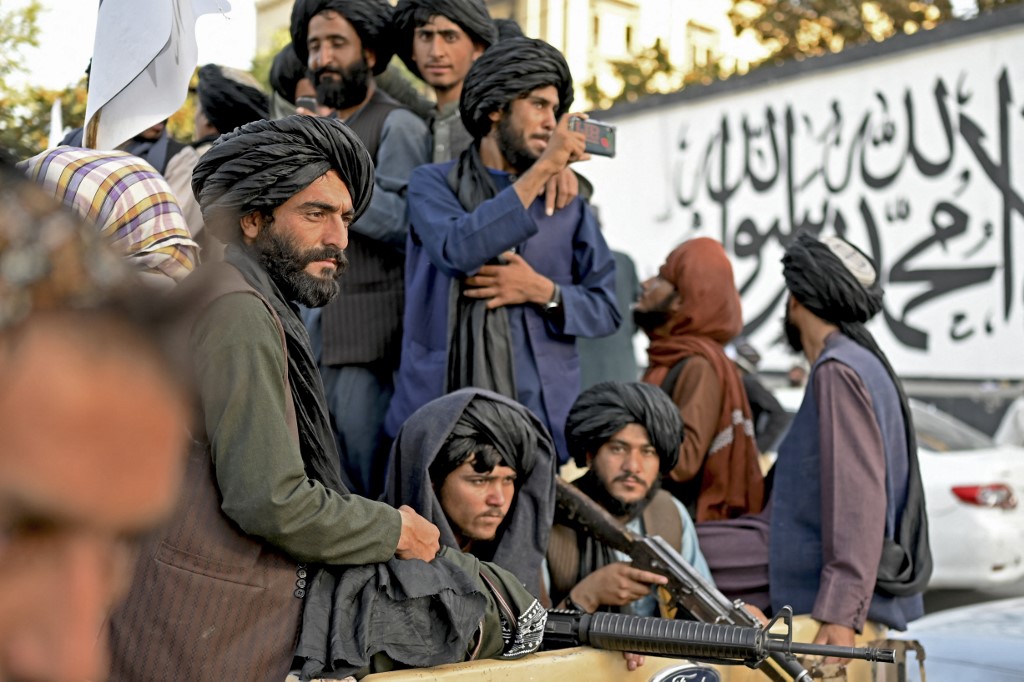
A large number of Taleban fighters have moved to Afghanistan’s cities since the movement’s capture of power, many of them seeing life in the city for the first time in their lifetime. These fighters, many of whom are from villages, had lived modest lives, entirely focused on the war. Their...
www.afghanistan-analysts.org


